DIY Nuclear Protection: A Free Guide to Consumer Shielding and Radiation Safety Materials
Jump to Section
- Understanding the Three Pillars of Radiation Protection
- Common Household Materials for Radiation Shielding
- Calculating Halving Thickness for DIY Solutions
- Building a Temporary Fallout Shelter at Home
- Personal Protective Equipment (PPE) for Consumer Safety
- Essential Radiation Monitoring Tools for Civilians
- Frequently Asked Questions
Understanding the Three Pillars of Radiation Protection
When it comes to nuclear protection, whether from a power plant incident or a tactical event, the physics of safety rely on three fundamental principles: Time, Distance, and Shielding. Understanding these concepts is the first step in DIY radiation safety.
Time: Most radiation following a nuclear event decays rapidly. The "Rule of Seven and Ten" suggests that for every seven-fold increase in time, the radiation intensity decreases by a factor of ten. Reducing the time you are exposed directly reduces your total dose.
Distance: Radiation behaves like light from a bulb. The further you are from the source, the lower the intensity. In a fallout scenario, staying in the center of a large building or deep underground maximizes the distance between you and the radioactive particles settling on the roof or ground outside.
Shielding: This is the use of physical mass to absorb or deflect ionizing radiation. Different materials have different "stopping power," which is critical when choosing DIY materials for home protection.
Common Household Materials for Radiation Shielding
In a crisis, you may not have access to industrial lead plating. However, many common consumer materials provide excellent shielding if used in sufficient quantities. The key is density.
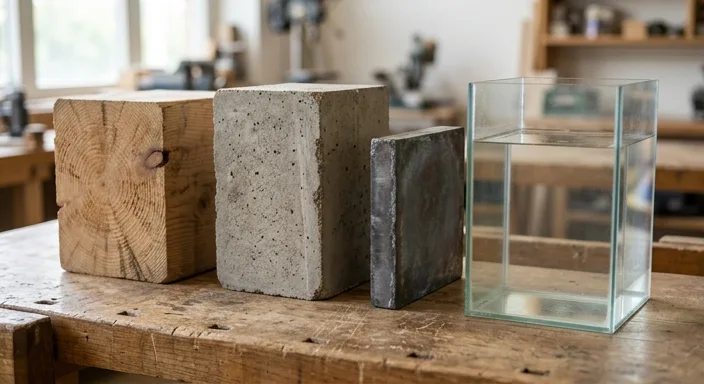
- Lead: The gold standard. Even thin sheets or lead-lined blankets can significantly attenuate gamma rays.
- Steel and Iron: Heavy kitchen appliances or scrap metal can be stacked to create a dense barrier.
- Concrete and Brick: Standard construction materials are effective. A foot of concrete is a powerful shield against fallout.
- Earth/Dirt: Perhaps the most accessible DIY material. Filling bags with soil (sandbags) is one of the most effective ways to fortify a room.
- Water: While less dense than lead, water is an excellent neutron absorber. Stacking cases of bottled water or filling large containers can create a makeshift barrier.
- Books and Paper: Surprisingly, tightly packed books or stacks of newspaper are quite dense and can be used to fill gaps in a shelter.
Calculating Halving Thickness for DIY Solutions
To understand how much material you need, you must understand the concept of "Halving Thickness." This is the thickness of a specific material required to reduce the radiation intensity by 50%.
For gamma radiation from typical fallout, the approximate halving thicknesses are:
- Steel: 0.7 inches (1.8 cm)
- Concrete: 2.4 inches (6.1 cm)
- Earth: 3.6 inches (9.1 cm)
- Water: 7.2 inches (18 cm)
- Wood: 11.0 inches (28 cm)
To reduce radiation to 1/1000th of its outside intensity (a common goal for fallout shelters), you need roughly 10 halving thicknesses. This would mean approximately 24 inches of concrete or 36 inches of packed earth.
Building a Temporary Fallout Shelter at Home
If you need to create a "shelter-in-place" solution quickly, focus on the basement. If no basement is available, choose the most central room on the lowest floor, away from windows.
Follow these steps for DIY fortification:
- Identify the Corner: Use the corner of a basement that is below ground level. The surrounding earth acts as a natural shield.
- Create a "Crawlspace": Use a heavy table or workbench. If you don't have one, create a "lean-to" using doors taken off their hinges.
- Piling Mass: Pile as much heavy material as possible on top of and around your crawlspace. Use sandbags, water jugs, heavy books, or furniture.
- Ventilation: Ensure there is a small "baffled" air intake. A simple 90-degree bend in a vent pipe can prevent heavy fallout particles from drifting directly into the shelter area.
Personal Protective Equipment (PPE) for Consumer Safety
PPE in a nuclear scenario is designed primarily to prevent internal contamination—preventing you from breathing in or swallowing radioactive dust (fallout). It is not intended to stop high-energy gamma rays (that is what the shelter mass is for).
- Respiratory Protection: An N95 mask is the bare minimum, but an N100 or a full-face respirator with P100 filters is significantly better for filtering fine particulate matter.
- Skin Coverage: Disposable Tyvek suits or even heavy raincoats can prevent fallout from settling on your skin or clothes. If you go outside, these "hot" clothes must be removed before entering your clean shelter area.
- Radiation Blankets: Specialty consumer products like lead-lined blankets or high-density shielding fabrics are becoming popular for DIY enthusiasts. These can be draped over sensitive areas or used to line "weak spots" in a temporary shelter.
Essential Radiation Monitoring Tools for Civilians
You cannot see, smell, or taste radiation. Monitoring tools are the only way to know if your DIY shielding is working and when it is safe to emerge.
Geiger Counters: These measure the rate of radiation (counts per minute or microsieverts per hour). They are vital for detecting the presence of fallout on surfaces or in food.
Dosimeters: Unlike a Geiger counter, which shows the current rate, a dosimeter measures the total accumulated dose over time. This is critical for ensuring you stay below emergency exposure limits during a prolonged event.
Frequently Asked Questions
Aluminum foil is effective against alpha and some beta radiation, but it offers virtually zero protection against the high-energy gamma radiation produced in a nuclear event. You need mass and density.
The most dangerous period is the first 24 to 48 hours. However, depending on your proximity to the event, you may need to remain sheltered for up to two weeks. A battery-powered radio is essential to listen for official "all-clear" messages.
A house is always better. Cars offer very little shielding and have many windows and air gaps. If you are caught in a car, find the nearest sturdy building immediately.