I may earn a commission at no extra cost to you. #ad
The Ultimate Free Guide to Choosing the Best EMF Protection Blanket for Pregnancy
Pregnancy is a time of incredible transformation and heightened awareness. As an expectant mother, you are likely scrutinizing everything from your diet to your skincare products. However, one invisible factor often gets overlooked: electromagnetic field (EMF) radiation. With the ubiquity of smartphones, tablets, and Wi-Fi, our environment is saturated with non-ionizing radiation.
Choosing an EMF protection blanket is one of the most effective ways to provide a physical barrier between these frequencies and your developing baby. But with so many options on the market, how do you know which one actually works? This guide will break down the science, the materials, and the critical features you need to consider.
Jump to Section
Understanding EMF and Prenatal Health
Electromagnetic fields are invisible areas of energy associated with the use of electrical power and various forms of natural and man-made lighting. During pregnancy, the developing fetus is particularly sensitive to environmental stressors. Rapidly dividing cells and the complex formation of the nervous system mean that the protective barriers we have as adults are not yet fully present in an embryo or fetus.
While the long-term effects are still being studied globally, many experts suggest the "Precautionary Principle." This means taking simple, non-invasive steps to reduce exposure where possible. An EMF blanket acts as a Faraday cage for your belly, reflecting incoming radiofrequency (RF) radiation away from your womb.
Shielding Effectiveness: Decoding the Decibels
When shopping for a radiation blanket, you will see terms like "dB" (decibels) and "Shielding Effectiveness." This is the most important technical specification to understand. The decibel scale is logarithmic, meaning a small increase in the number represents a massive increase in protection.
- 10dB: Blocks 90% of radiation.
- 30dB: Blocks 99.9% of radiation.
- 50dB: Blocks 99.999% of radiation.
For pregnancy, we recommend a blanket that provides at least 35dB to 50dB across a wide frequency range (from 10MHz to 10GHz). This range covers everything from standard radio waves to the high-frequency signals used in modern 5G networks.
Material Science: Silver vs. Other Metals
The "magic" of an EMF blanket lies in its conductive layer. Not all metals are created equal when it comes to shielding and skin safety.
Silver: This is the gold standard (pun intended). Silver is highly conductive, naturally anti-bacterial, and safe for skin contact. Most premium pregnancy blankets use silver fibers woven into cotton or bamboo. Silver provides the highest shielding attenuation and lasts longer through wash cycles.
Copper and Nickel: While effective at shielding, these metals can sometimes cause skin irritation or allergic reactions. They are often used in industrial settings but are less common in high-end consumer blankets intended for direct skin contact during pregnancy.
Aluminum: Occasionally used in cheaper inserts, aluminum is stiff and crinkly, making it uncomfortable for a blanket that is supposed to be soft and cozy.
Safety Certifications to Look For
Don't just take a manufacturer's word for it. Look for third-party verification to ensure the blanket is both effective and safe from harmful chemicals.
First, look for Lab Testing Reports. A reputable company will provide a PDF of their shielding effectiveness test, often conducted by independent laboratories using IEEE or ASTM standards. This proves the blanket actually blocks the frequencies it claims to.
Second, look for OEKO-TEX® Standard 100. Since the blanket will be against your skin and near your baby, you want to ensure the fabrics are free from harmful substances like formaldehyde, heavy metals, and pesticides. This is especially important for the outer "comfort" layers of the blanket.
Comfort, Breathability, and Daily Use
If a blanket is scratchy, heavy, or too hot, you won't use it. During pregnancy, your body temperature often runs high, so breathability is key. Look for blankets that use natural fibers for the outer layers, such as:
- Organic Cotton: Durable, breathable, and easy to wash.
- Bamboo: Silky soft, moisture-wicking, and sustainable.
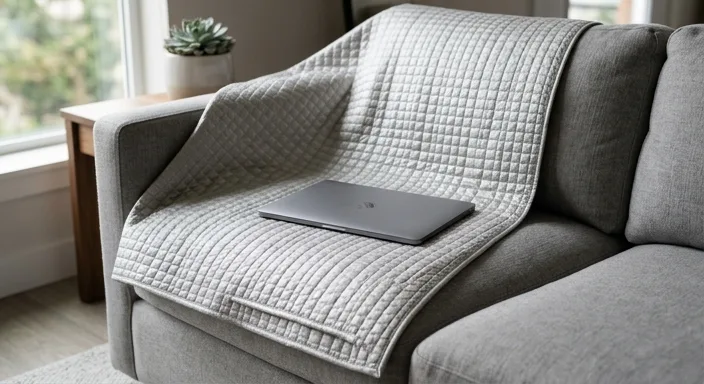
Size also matters. A "lap-sized" blanket is usually sufficient for covering the abdomen while sitting at a desk or on the couch. However, if you want full coverage while sleeping, look for a larger "throw" size. Ensure the blanket is lightweight enough to be portable so you can take it to the office or on a plane.
Frequently Asked Questions
Can I wash my EMF protection blanket?
Yes, but you must be careful. Most silver-shielding fabrics are sensitive to harsh detergents and high heat. Always use a pH-neutral detergent and air dry or tumble dry on the lowest possible heat setting.
Does the blanket block 5G?
Most high-quality blankets with silver fiber mesh are capable of shielding the frequencies used in 5G (up to 26-40 GHz), though they are most effective against the sub-6GHz frequencies which are currently the most common.
Should I use it even when I'm not using a laptop?
While the highest exposure comes from devices held close to the body, there is background radiation from Wi-Fi routers and cell towers. Many women find peace of mind using the blanket whenever they are relaxing at home.
Choosing the right protection is about balancing technical performance with daily comfort. By focusing on high-purity silver materials and verified decibel ratings, you can provide a safer environment for your baby to grow and develop.
Next Guide: How to Safely Wash and Care for Radiation Shielding Fabric