As awareness of electromagnetic fields (EMF) and radiofrequency (RF) radiation grows, many people are looking for ways to protect themselves at home. While professional EMF blankets are widely available, the "DIY spirit" has led many to wonder: Can I just make one myself?
The short answer is yes—you can manufacture a shielding device at home. However, the difference between a piece of fabric and a truly effective "Faraday cage" for your body lies in the details of the materials, the construction methods, and the testing. In this guide, we will break down the science of DIY shielding and help you decide if a homemade solution is right for your family.
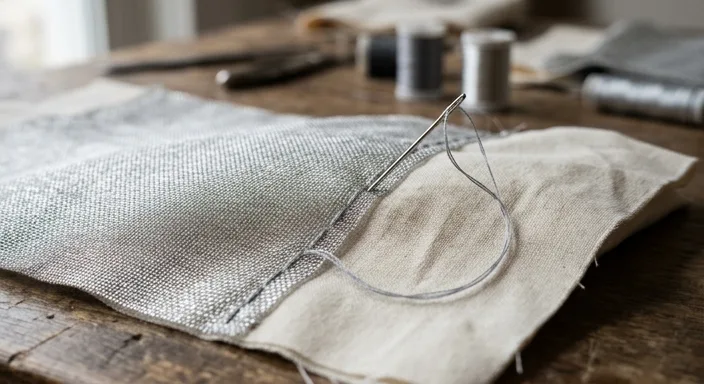
Before you start sewing, you must understand the physics of shielding. High-frequency radiation (from Wi-Fi, cell towers, and 5G) travels in waves. To stop these waves, you need a material that is conductive.
When an EMF wave hits a conductive surface (like silver, copper, or stainless steel mesh), the electrons in the metal move around and create an opposing field. This is known as the Faraday Cage principle. The radiation is either reflected away or absorbed as a tiny amount of heat. For a DIY blanket to work, it must have a consistent, gap-free layer of this conductive material.
You cannot use standard household fabrics like denim or wool to block EMF. You need specialized "Shielding Fabric." Here is what you will need:
Once your blanket is finished, you must test it. Place a cell phone inside the folded blanket or lay the blanket over a Wi-Fi router (temporarily) and use your EMF meter on the other side.
The Gap Problem: If your meter still shows high readings, you likely have "leaks." EMF radiation is like water; it will find the smallest hole or gap in the shielding. DIY blankets often suffer from poor seam integrity or thin spots in the shielding fabric that allow RF to penetrate.
While DIY is rewarding, professional manufacturers have several advantages:
There is one significant risk with DIY shielding: Reflections. If you don't use the blanket correctly, or if you leave large gaps, the radiation can bounce off the inner silver layer and actually concentrate around your body. This is why "partial shielding" is sometimes worse than no shielding at all.
Furthermore, most DIY fabrics are designed to block RF (Wi-Fi/Cell) but do not ground low-frequency Electric Fields (EF) from house wiring. To block EF, the blanket would need a grounding cord attached to a wall outlet's ground port, which adds a layer of electrical safety complexity most DIYers should avoid.
Can I use aluminum foil to make an EMF blanket?
Technically, aluminum foil blocks RF, but it is highly impractical for a blanket. It crinkles, tears easily, doesn't breathe, and can cause skin irritation. It is not recommended for anything other than temporary scientific experiments.
How do I wash a DIY EMF blanket?
You must use distilled water and a specialized detergent (like TexCare). Tap water often contains chlorine or minerals that oxidize silver, destroying its shielding capabilities instantly.
Is DIY cheaper than buying a professional blanket?
Usually, no. High-quality silver shielding fabric can cost $50-$100 per yard. When you add the cost of outer fabrics, conductive thread, and the risk of a sewing mistake, buying a pre-made, lab-tested blanket is often more cost-effective.
EMF Shielding Fabric
View on AmazonEMF Meter
View on AmazonShare this guide:
If you found this guide helpful, consider leaving a tip!
Explore More Free Guides